 current build
OpenClaw
My current build. An agentic workflow runner I am wiring up so agents can drive real tasks against the lab, the rack teaching itself to run itself. Very much under construction.
In developmentNewMain
My homelab is a living sandbox for cloud engineering, networking and software design. It is the supplemental layer that makes my hardware projects actually work, three nodes quietly running the services I depend on, and the place I break things on purpose to learn how they really work.
I build hardware. Rovers, messengers, smart-home rigs. None of it is interesting until it can talk to something. The homelab is where I learn the other half of the craft: the networking, the cloud patterns and the software design that turn a circuit board into a product that works from anywhere.
Containers, reverse proxies, storage tiers and backups. Running real services teaches the trade-offs that tutorials skip.
VLAN segmentation, RADIUS, WPA3-Enterprise and a fleet of UniFi gear. Enterprise patterns, at apartment scale.
Wiring services together, automating the boring parts, and deploying my own vibe-coded apps to a VM I can SSH into.
coturn and MQTT here are what let Project June stream over cellular and what school ESP32 rigs phone home to.
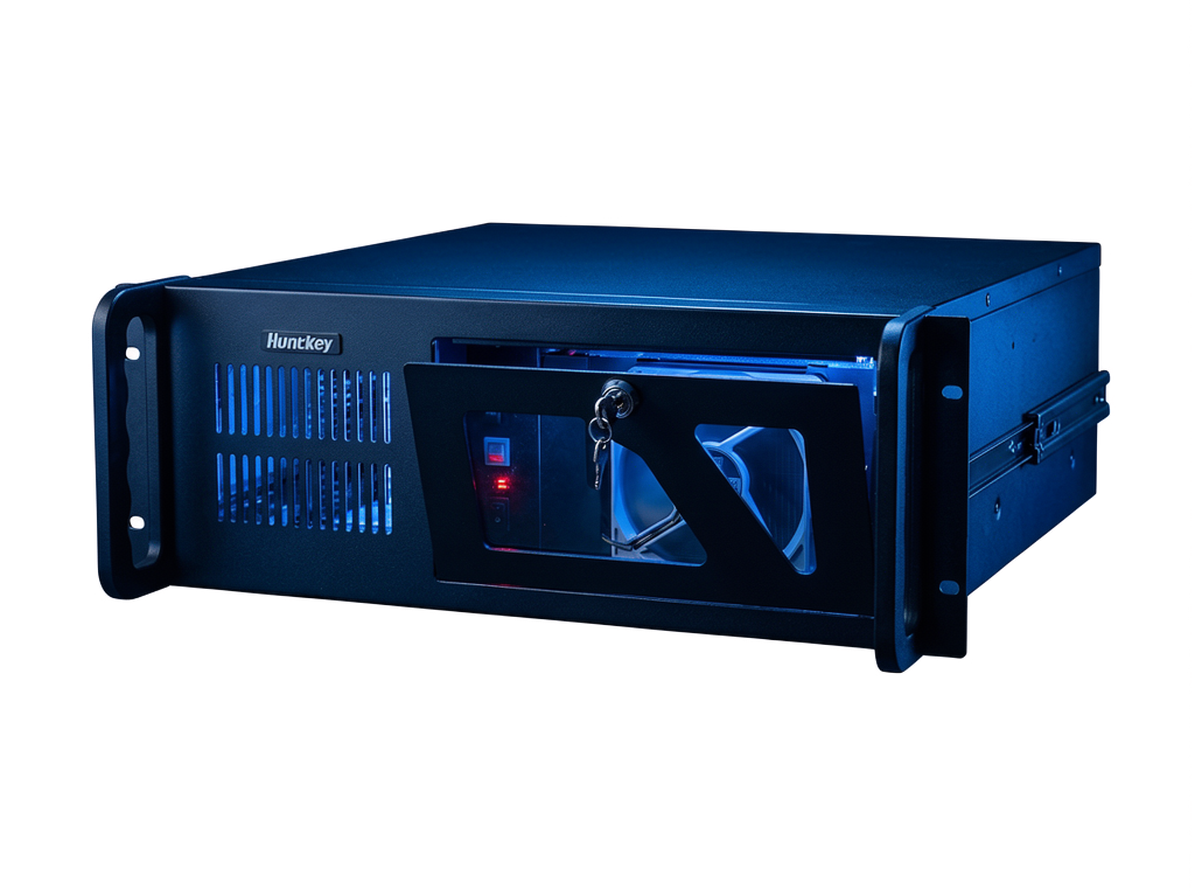 Online 24/7
Storage + compute
The workhorse. Unraid drives a parity-protected array for bulk data plus a ZFS NVMe mirror for anything that needs speed, and it hosts the bulk of the Docker stack. Almost everything you reach on the network ends up here.
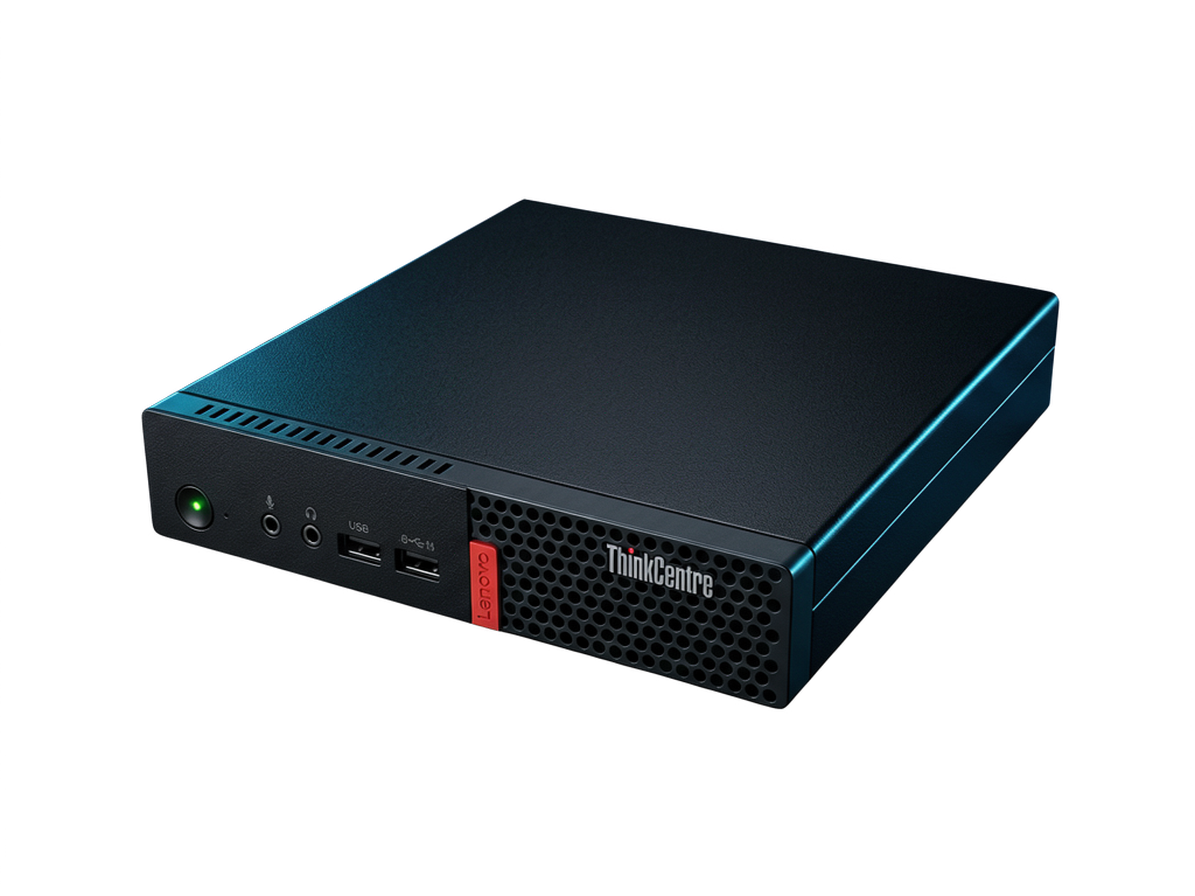 Online 24/7
Proxmox cluster
A tiny ThinkCentre that used to be my main server. It now runs the always on half of a Proxmox cluster, booting from its own 1TB SSD and hosting the CasaOS and Debian virtual machines that used to live on bare metal.
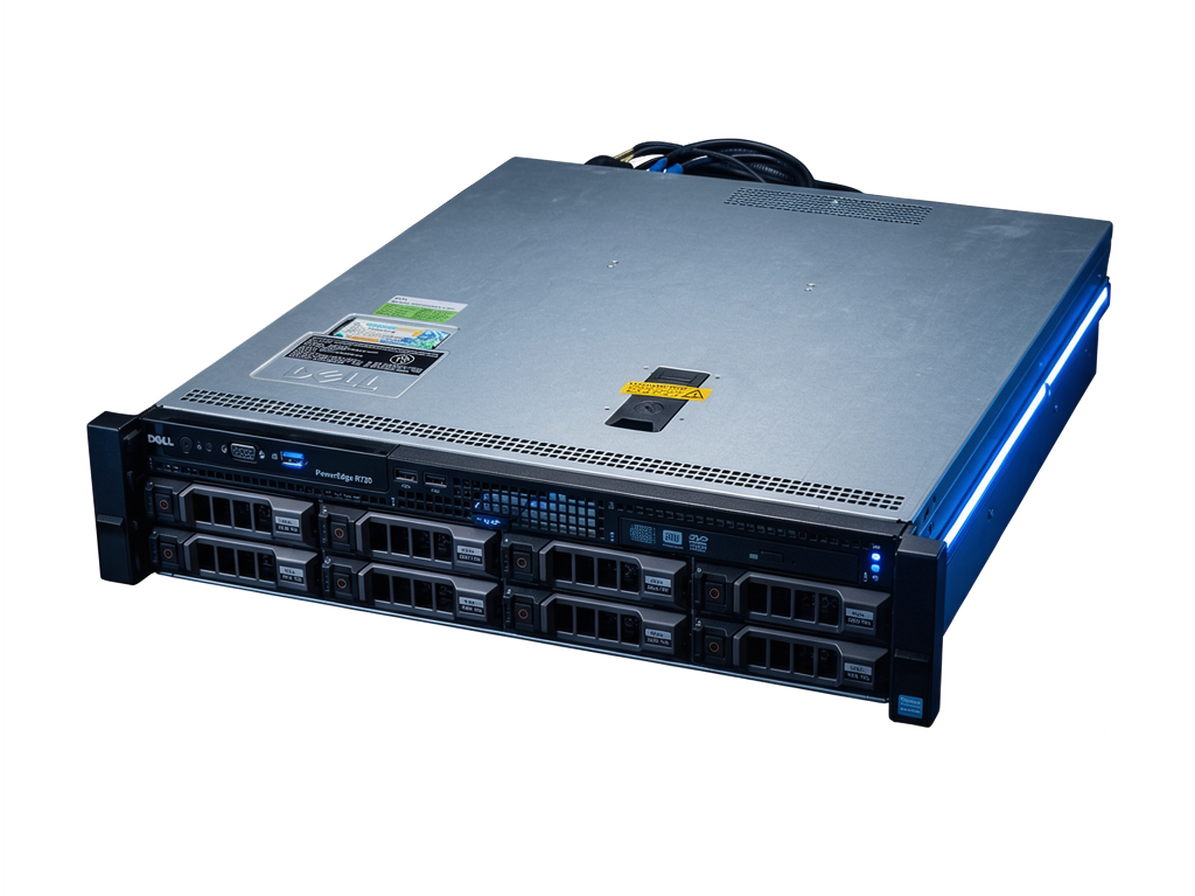 Wakes on demand
Proxmox PXE cluster
The heavy iron. Twenty Xeon cores and 128 GB of RAM, joined to the same PXE cluster as CaCa. It is hungry, so it stays asleep and only wakes through UpSnap when a job actually needs the muscle.
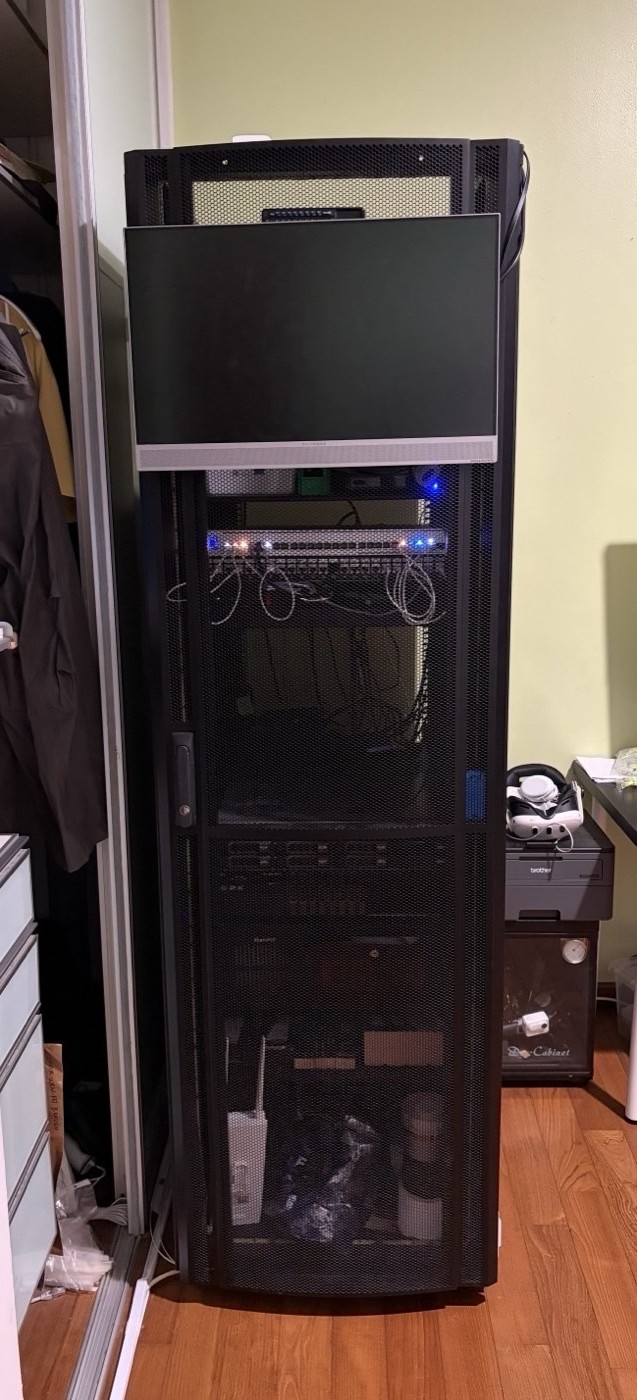
No render, no diagram. This is the actual rack in the corner of my room: the patch panel and its blue runs up top, the servers behind the mesh door, quietly humming through whatever I throw at them.
Everything routes through one segmented UniFi network. Tap any node to read its job, or pick a VLAN to light up its segment and watch the rest of the network fall back.
The UniFi Dream Machine Pro is the brain: gateway, firewall, controller and RADIUS server. It enforces which VLAN can talk to which, and authenticates the WPA3-Enterprise network.
Two parity plus three data drives. It holds the heavy, cold data: PXE backups, long-term archives and media. Survives a two-drive failure without losing a byte.
Two 2TB NVMe drives mirrored in ZFS. Docker app-data, VM disks and the PXE ISO library all run from here, where latency matters.
CaCa and Adell form one Proxmox cluster. CaCa boots from its own 1TB SSD and stays on around the clock, while Adell network-boots with no local OS drive and wakes only when something needs its cores.
current buildMy current build. An agentic workflow runner I am wiring up so agents can drive real tasks against the lab, the rack teaching itself to run itself. Very much under construction.
 self-hosted
The front door. Every container points here. NPM terminates SSL and routes each chiambucket.com subdomain to the right service, now hardened with a CrowdSec bouncer that auto bans hostile traffic.
 self-hosted
A WireGuard mesh that drops every device onto one private network. It is how I SSH home, edit configs, and get a free personal VPN from anywhere.
 self-hosted
A proxy that disguises my traffic as ordinary HTTPS to the server, so a locked down school network still lets me reach the things I need.
 self-hosted
A zero trust connector kept around as one more fallback path home, alongside Teleport, WireGuard, and Unraid Connect.
 self-hosted
Network wide ad and tracker blocking at the DNS layer. Mostly a troubleshooting tool now, but a satisfying one when it kicks in.
If one tunnel breaks I am never locked out. Six independent paths all lead back to the rack, and keeping each one alive is half the fun, half the lesson.
A WireGuard mesh and my everyday path in, one identity across every device.
A bare encrypted tunnel straight into the network when I want no middleman.
A one tap VPN issued straight from the UDM Pro, with no client to configure.
Identity-checked access that leaves no inbound ports open to the internet.
HTTPS-shaped traffic that slips home past locked-down school and office Wi-Fi.
A direct line to the Unraid box itself, straight from my account dashboard.
Every road ends here. Drop any single path and five others still reach the rack.
There is always one more container to break, one more route to harden. Right now I am wiring up OpenClaw so agents can drive the lab themselves.